
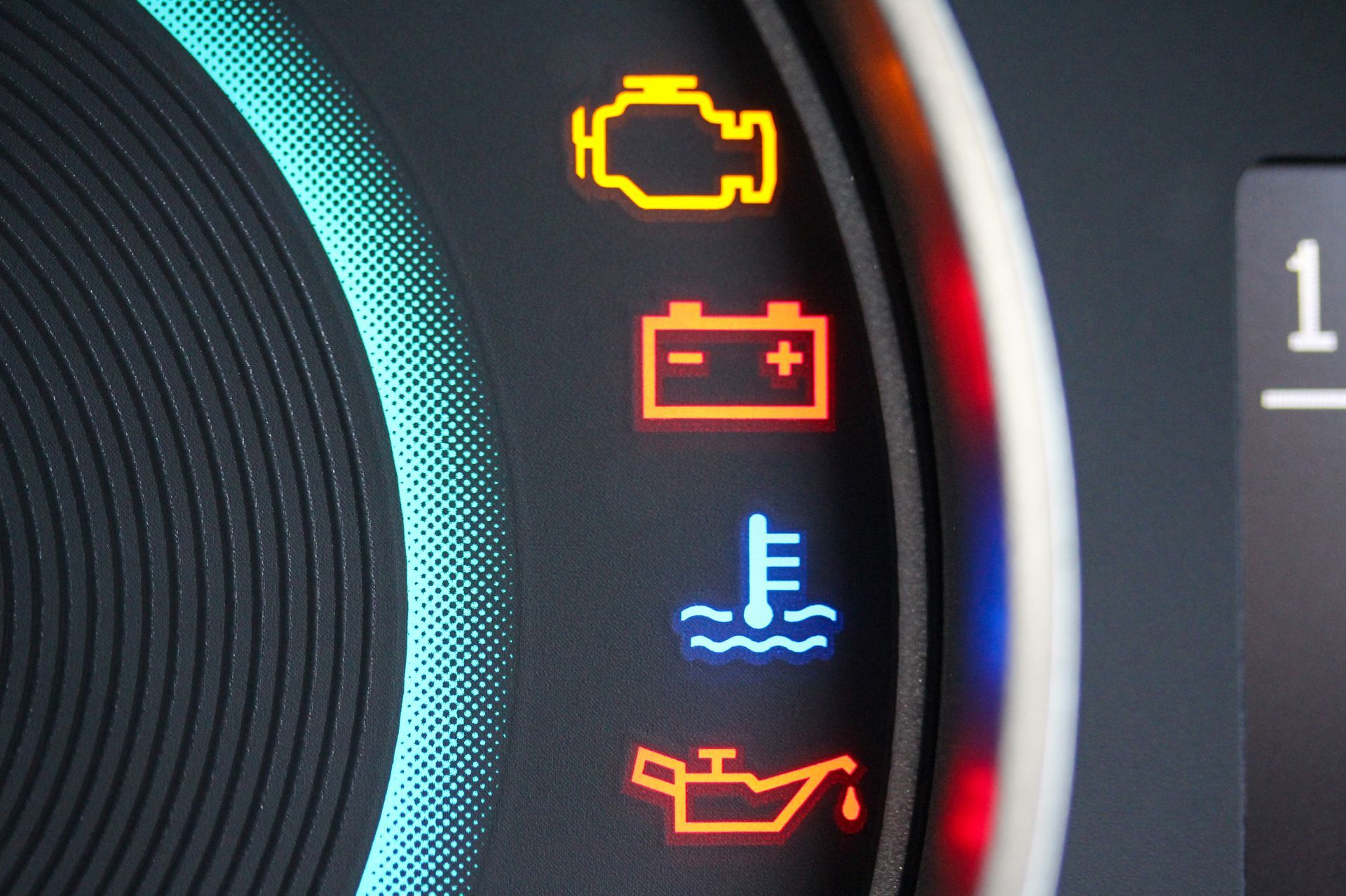
You may have noticed when you start your vehicle, you’ll see several symbols light up on the dash. They’re different colors and shapes, and sometimes it’s hard to figure out what each of those symbols mean. They are warning lights and symbolize something in your vehicle is sending you a message. It’s the result of today’s vehicles having lots of computers. The good thing about having so many of these warning lights is they can let you know there’s an issue in need of attention before a more serious failure. Sometimes it can be challenging to figure out what each light means, so here are some of the most common ones. One looks like your vehicle’s engine from the side, the Check Engine light. It alerts you to something as simple as a loose gas cap to a far more serious problem like an overheating engine. When the Check Engine light comes on, bring it into our shop. If it’s blinking or flashing, it likely has more urgent issues, so bring it in sooner. Another warning light looks like a genie lamp with a drip at the end, and it’s the engine oil light. When it comes on, it means something’s wrong with the oil pressure, and that can be a sign of serious engine problems. Don’t ignore the oil light and bring it in for service as soon as you can. One warning light looks like an old-style thermometer with a bulb at the bottom and degree marks on the side sitting in fluid. That’s all about your coolant level, and when it comes on, your engine may be overheating. It’s another one that’s telling you to bring it in to us for service quickly. When your brakes aren’t working right, a light comes on that looks like a circle with a pair of half circles at the sides and an exclamation mark in the middle. Driving with malfunctioning brakes is dangerous, and it’s another warning light that should prompt you to get your vehicle looked at very soon. If you see a light on your dash you don’t understand, try looking it up in your owner’s manual or bring it into us so we can help decipher it. Warning lights are there to help you, and so are we. John's Automotive Care 6267 Riverdale St San Diego, CA 92120 (619) 280-9315 http://www.johnsautomotivecare.com
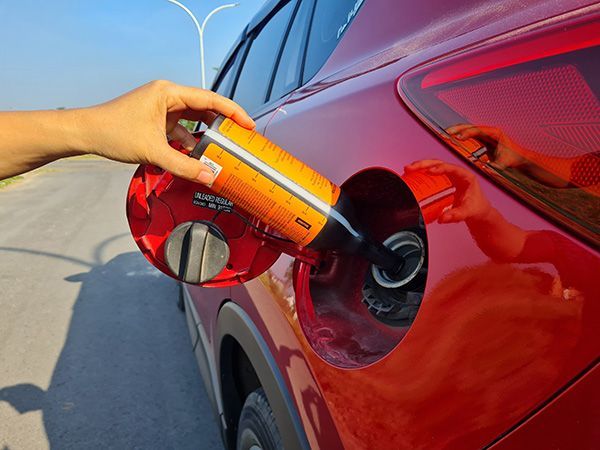
Your vehicle gets its power from burning fuel, usually gasoline, and it counts on something called fuel injectors to send gas to the engine in a spray that is easy to ignite. It’s a precise operation, and when it’s working well, you have plenty of power and an efficient engine. But after time, contaminants in the fuel system may prevent the injectors from spraying like they’re supposed to. They can also shoot contaminants into the engine. One sign that could point to dirty fuel injectors is a misfiring engine. Misfires can be caused by several things, so it’s a good idea to bring your vehicle to us so we can trace the cause. Another sign is that your fuel economy has gone downhill or your engine doesn’t have the “pep” it used to. If we discover that your injectors are clogged or not working the way they should, we can clean them to get rid of those contaminants to restore your engine to its top performance. When you bring your vehicle to us, we will connect the flushing equipment, flush out the injectors and reassemble the system. A good time to have fuel injectors inspected is when you bring your vehicle in for routine maintenance. An oil change is an ideal time to have a technician take a close look at your entire fuel delivery system. When you have your fuel injectors cleaned, you may see your mileage go up, your engine performance improve, and your exhaust emissions decrease. John's Automotive Care 6267 Riverdale St San Diego, CA 92120 (619) 280-9315 http://www.johnsautomotivecare.com
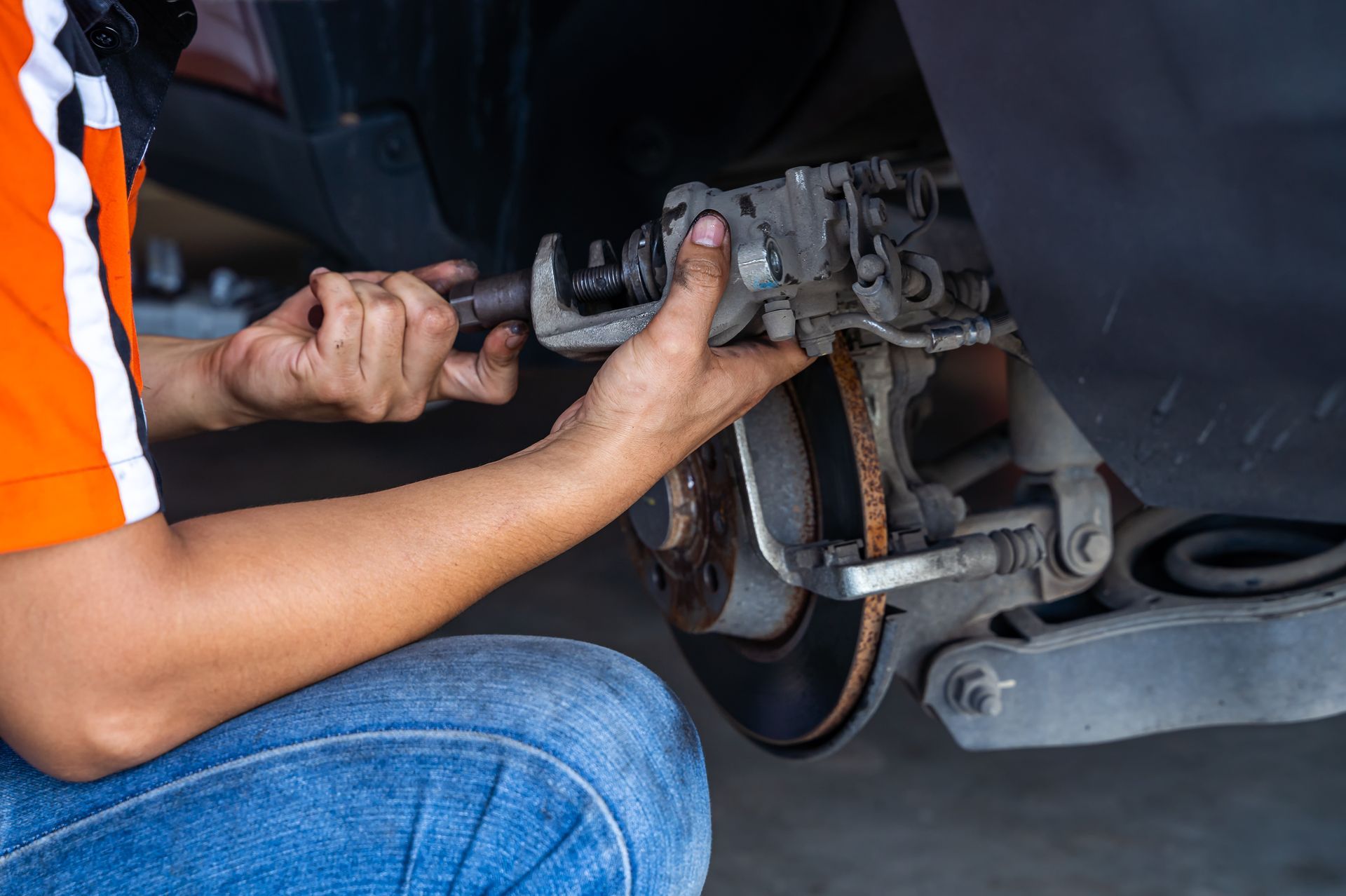
Your vehicle's brakes wear out. It's inevitable. You'll notice it when you step on the brake pedal and feel it harder to stop, or there's vibration when you are braking. Most modern vehicles have disc brakes that each use a brake pad that press on a disc (disc brakes!) called a rotor. The friction between them enables you to stop, and each time you do a little bit of the pad and the rotor wears down. The original brakes on vehicles used a rotor that was thick enough to last through at least two replacements of the pads. But vehicle manufacturers who want to save costs and weight now make them thinner, and sometimes the rotors have to be replaced after the first pad replacement. But not always. Vehicle manufacturers specify a minimum thickness to provide safe braking. Sometimes rather than having to have your rotors replaced, they can be put on a lathe and resurfaced. In other words, the surfaces of the disc can be slightly shaved off so the surface is flat and doesn't wobble. Whenever you bring your vehicle in to have the brakes checked, the technician will measure the thickness of the rotors to see if they can be resurfaced without leaving them too thin for safe braking. If they can, with the right tools and skill, the rotors can be resurfaced. If not, the rotors should be replaced. Discuss the options with your service advisor. Our service center can recommend replacements that are designed to help stop your vehicle as well as or better than the vehicle's original rotors. Either way, keep in mind that keeping your brakes in top condition can supply the margin of safety that may one day save your life or the lives of those around you. John's Automotive Care 6267 Riverdale St San Diego, CA 92120 (619) 280-9315 http://www.johnsautomotivecare.com