Unlock the Secret (Malfunctioning Door Lock Actuator)

April 11, 2021

Close-up of a blue car headlight and hood in a showroom, with a blurred car in the background.

What a convenience power door locks are on a vehicle. The latest don't even require you to push the button on the key fob; all you have to do is have it with you. But sometimes there's a component of power door locks that can fail, especially when they are used several times each day. Those are called the door lock actuators.


The actuator is an electric part that works with others (like motors and gears) to lock and unlock doors. You can hear them work, sometimes with the little whirr of the gear or the quiet clunk of the lock finishing its cycle. And it's good to pay attention to that sound because if it starts to sound different, it could be a signal that your lock is on the brink of failing. Another sign of a failing power door lock actuator is they start working intermittently or quickly and erratically. The driver's door is often the first to start acting up since it's the one that usually gets the most use.


When you start to notice these signs, consider a visit to your service facility to get your vehicle checked out. If you wait too long, you may find yourself getting locked out of your vehicle. Many vehicles do have mechanical keys available as a failsafe so you are at least able to get inside. Some of them are hidden inside the key fob and you should know how to access them. Check with your owner's manual or ask your service advisor.


It's extremely inconvenient to have to unlock your vehicle with the mechanical key, then get inside and unlock the other doors. It's even more inconvenient if you have passengers in the rear seats. And that doesn't even count having to go through the same thing to lock the doors when you arrive at your destination.


There are many things that can cause power door locks to malfunction, but if it turns out to be a power lock actuator, the most common remedy is to replace it. Some are easier for technicians to reach than others, depending on your vehicle's design. But once your locks are working again, you might think you've found the "key" to happiness!


John's Automotive Care

6267 Riverdale St

San Diego, CA 92120

(619) 280-9315

http://www.johnsautomotivecare.com

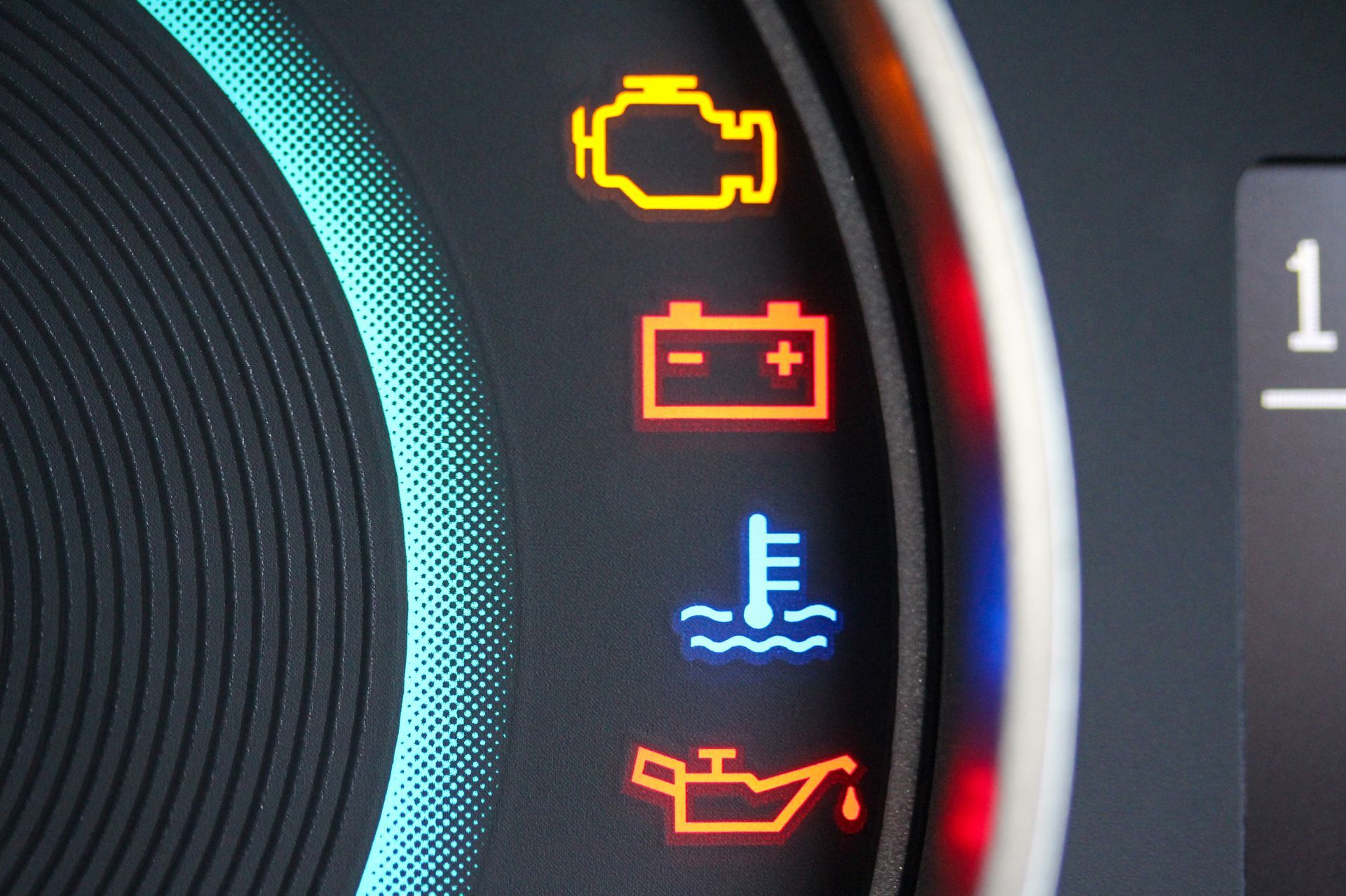
Dashboard warning lights lit: check engine, battery, temperature, and oil pressure indicators illuminated.
November 23, 2025
You may have noticed when you start your vehicle, you’ll see several symbols light up on the dash. They’re different colors and shapes, and sometimes it’s hard to figure out what each of those symbols mean. They are warning lights and symbolize something in your vehicle is sending you a message. It’s the result of today’s vehicles having lots of computers. The good thing about having so many of these warning lights is they can let you know there’s an issue in need of attention before a more serious failure. Sometimes it can be challenging to figure out what each light means, so here are some of the most common ones. One looks like your vehicle’s engine from the side, the Check Engine light. It alerts you to something as simple as a loose gas cap to a far more serious problem like an overheating engine. When the Check Engine light comes on, bring it into our shop. If it’s blinking or flashing, it likely has more urgent issues, so bring it in sooner. Another warning light looks like a genie lamp with a drip at the end, and it’s the engine oil light. When it comes on, it means something’s wrong with the oil pressure, and that can be a sign of serious engine problems. Don’t ignore the oil light and bring it in for service as soon as you can. One warning light looks like an old-style thermometer with a bulb at the bottom and degree marks on the side sitting in fluid. That’s all about your coolant level, and when it comes on, your engine may be overheating. It’s another one that’s telling you to bring it in to us for service quickly. When your brakes aren’t working right, a light comes on that looks like a circle with a pair of half circles at the sides and an exclamation mark in the middle. Driving with malfunctioning brakes is dangerous, and it’s another warning light that should prompt you to get your vehicle looked at very soon. If you see a light on your dash you don’t understand, try looking it up in your owner’s manual or bring it into us so we can help decipher it. Warning lights are there to help you, and so are we. John's Automotive Care 6267 Riverdale St San Diego, CA 92120 (619) 280-9315  http://www.johnsautomotivecare.com
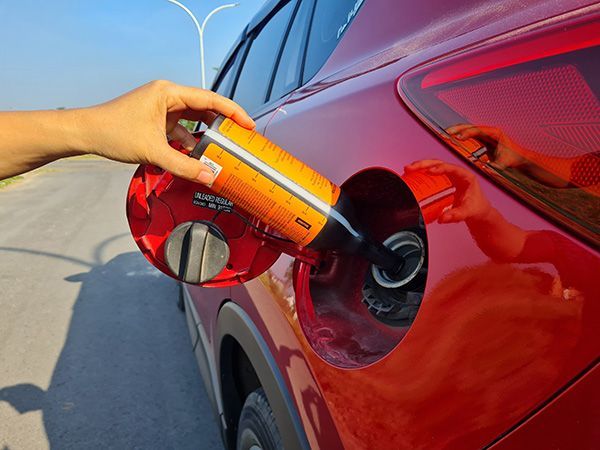
Hand pouring liquid from orange container into a red car's gas tank. Outdoors, sunny.
May 4, 2025
Your vehicle gets its power from burning fuel, usually gasoline, and it counts on something called fuel injectors to send gas to the engine in a spray that is easy to ignite. It’s a precise operation, and when it’s working well, you have plenty of power and an efficient engine. But after time, contaminants in the fuel system may prevent the injectors from spraying like they’re supposed to. They can also shoot contaminants into the engine. One sign that could point to dirty fuel injectors is a misfiring engine. Misfires can be caused by several things, so it’s a good idea to bring your vehicle to us so we can trace the cause. Another sign is that your fuel economy has gone downhill or your engine doesn’t have the “pep” it used to. If we discover that your injectors are clogged or not working the way they should, we can clean them to get rid of those contaminants to restore your engine to its top performance. When you bring your vehicle to us, we will connect the flushing equipment, flush out the injectors and reassemble the system. A good time to have fuel injectors inspected is when you bring your vehicle in for routine maintenance. An oil change is an ideal time to have a technician take a close look at your entire fuel delivery system. When you have your fuel injectors cleaned, you may see your mileage go up, your engine performance improve, and your exhaust emissions decrease. John's Automotive Care 6267 Riverdale St San Diego, CA 92120 (619) 280-9315  http://www.johnsautomotivecare.com
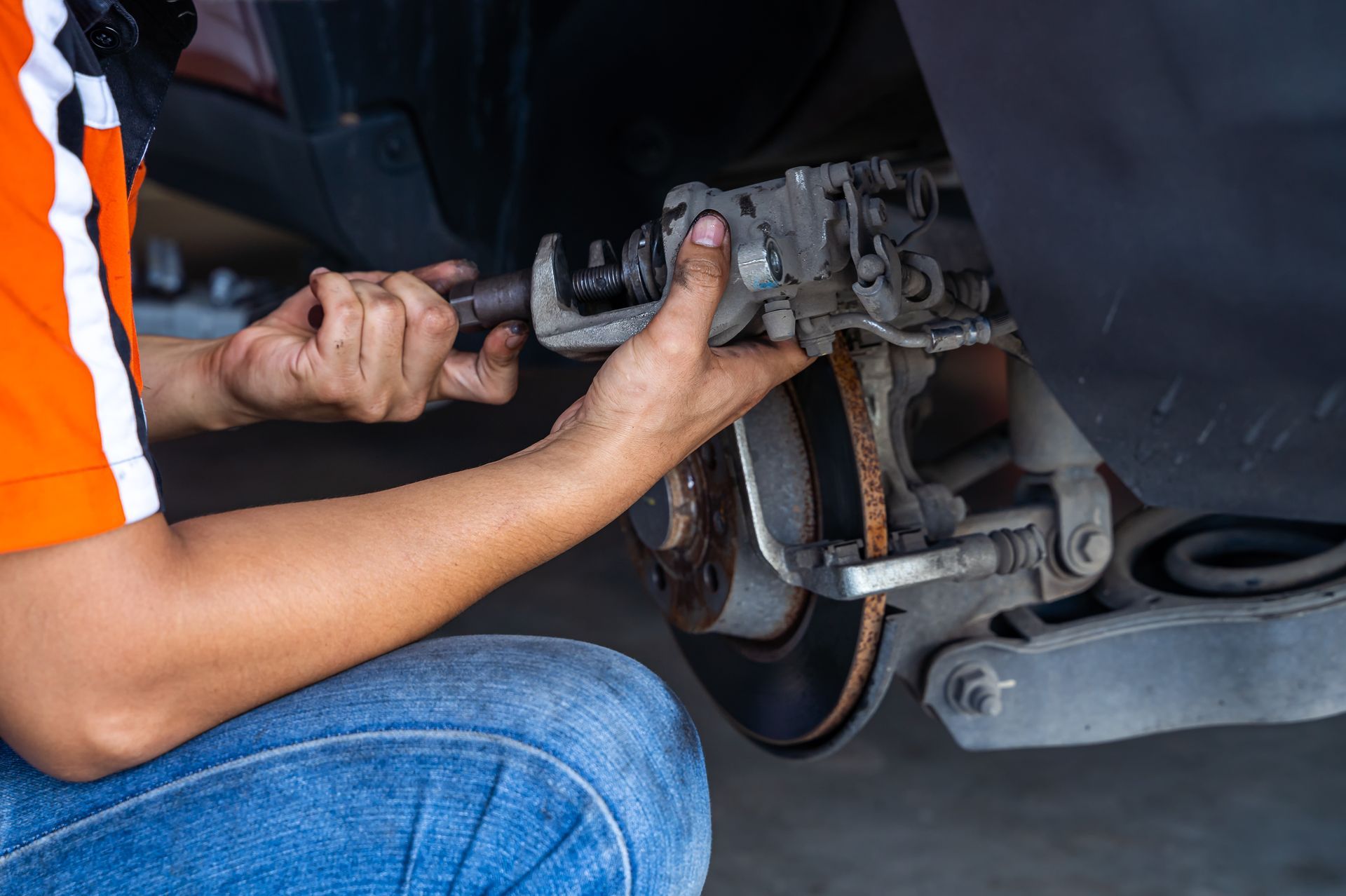
Mechanic using a tool to work on a car's brake caliper.
July 21, 2024
Your vehicle's brakes wear out. It's inevitable. You'll notice it when you step on the brake pedal and feel it harder to stop, or there's vibration when you are braking. Most modern vehicles have disc brakes that each use a brake pad that press on a disc (disc brakes!) called a rotor. The friction between them enables you to stop, and each time you do a little bit of the pad and the rotor wears down. The original brakes on vehicles used a rotor that was thick enough to last through at least two replacements of the pads. But vehicle manufacturers who want to save costs and weight now make them thinner, and sometimes the rotors have to be replaced after the first pad replacement. But not always. Vehicle manufacturers specify a minimum thickness to provide safe braking. Sometimes rather than having to have your rotors replaced, they can be put on a lathe and resurfaced. In other words, the surfaces of the disc can be slightly shaved off so the surface is flat and doesn't wobble. Whenever you bring your vehicle in to have the brakes checked, the technician will measure the thickness of the rotors to see if they can be resurfaced without leaving them too thin for safe braking. If they can, with the right tools and skill, the rotors can be resurfaced. If not, the rotors should be replaced. Discuss the options with your service advisor. Our service center can recommend replacements that are designed to help stop your vehicle as well as or better than the vehicle's original rotors. Either way, keep in mind that keeping your brakes in top condition can supply the margin of safety that may one day save your life or the lives of those around you. John's Automotive Care 6267 Riverdale St San Diego, CA 92120 (619) 280-9315  http://www.johnsautomotivecare.com
Fuel nozzle pumping gasoline into a car's fuel tank.
April 7, 2024
You're heading down the road and you notice your vehicle is sputtering, like it's running out of gas. But the gauge show's it's still got a quarter of a tank. So what gives? It could be that your fuel pump is failing, meaning your engine is not getting enough gas to run properly. While fuel pumps are built to last a long time, sometimes they fail. Other symptoms you may have a bad fuel pump include your vehicle stalling and then refusing to start again, the engine overheating or a hum or whirr coming from around the gas tank. Or, your Check Engine light may come on. Most fuel pumps are in the gas tank. They have a small electric motor in them. When you bring your vehicle to our service center, a technician will run tests to confirm the fuel pump is getting power to it but has failed. Some vehicles have an access panel so the fuel pump can be removed and replaced. But in some vehicles that don't have that access panel, the technician has to drain the fuel and take the tank out of the vehicle to be able to replace the fuel pump inside. Some parts such as brackets that attach the pump can be reused when the new fuel pump is installed. Most technicians will recommend replacing the fuel filter at the same time the fuel pump is changed out. If the technician has to remove the fuel tank, they'll also check for rust and corrosion and replace any affected parts. Keep one thing in mind - your vehicle's fuel pump is in the fuel tank because it's kept cool and lubricated by the gasoline in the tank. Try not to let your fuel level go below a half or quarter of a tank to maximize the life of your fuel pump. Also, try to use Top Tier gasoline that has higher standards than some other fuels. Your engine—and fuel pump—will thank you. John's Automotive Care 6267 Riverdale St San Diego, CA 92120 (619) 280-9315  http://www.johnsautomotivecare.com
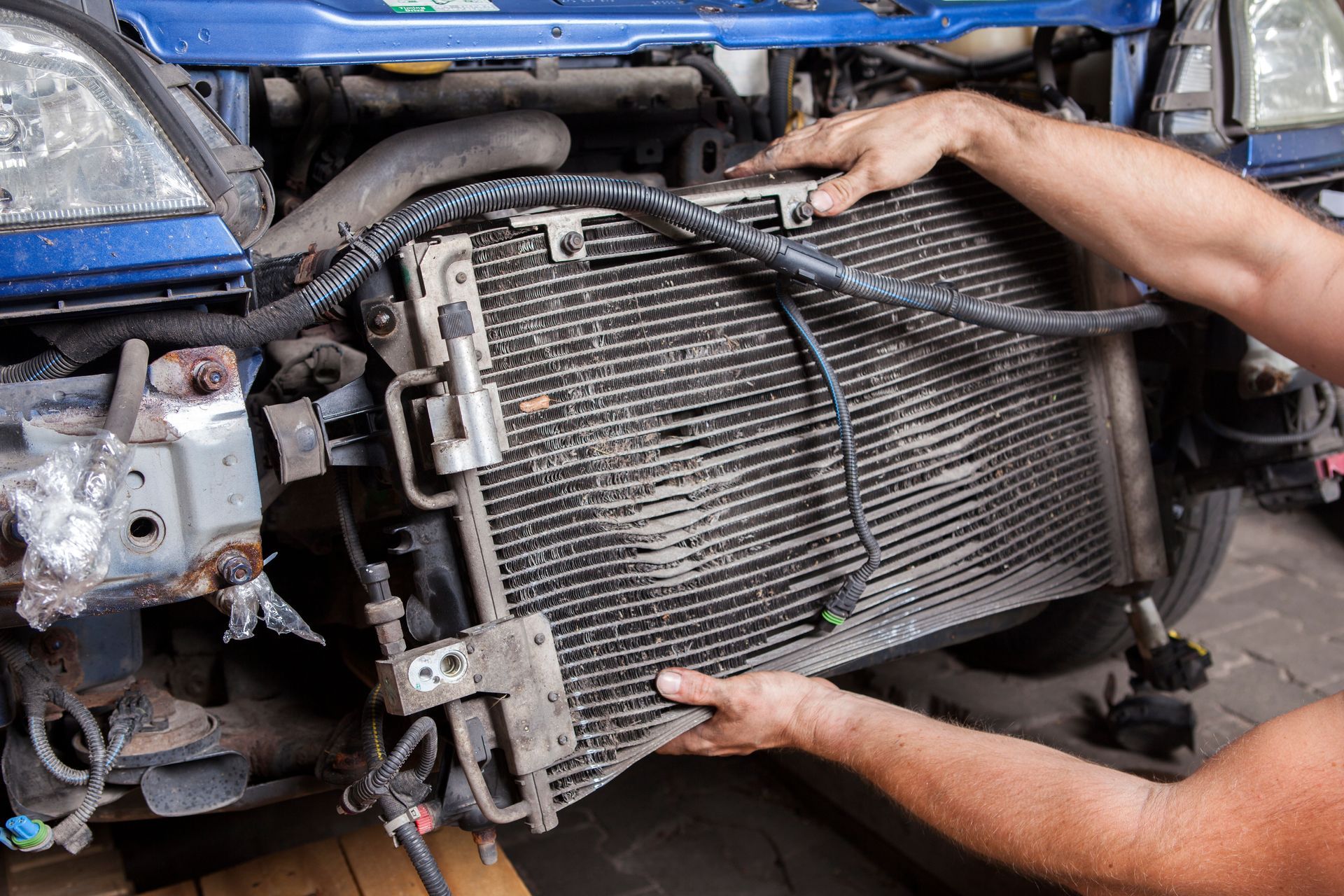
A person removing a car radiator from the front of a blue vehicle.
October 29, 2023
If there’s one thing you should pay attention to with your vehicle, it’s the temperature gauge. It’s the one that may say C---H (that means “cold---hot”). Or maybe yours has a picture of a thermometer on it and a blue and red zone. If you see the needle heading farther to the “H” or red area, that means your vehicle’s engine is running hotter than it normally does. One of the most common causes of an engine running hot is a leak in your cooling system. Maybe you’ve seen puddles of coolant under your vehicle, or you’ve smelled the coolant, either inside or outside your vehicle (it has a sort of “sweet” or fruity smell). That’s your engine giving you a warning signal that it’s time to head over to your repair facility to find out what’s going on. Your vehicle’s coolant can leak for several reasons. You may have hoses that are deteriorating (heat and age take their toll). It’s possible the pump that circulates coolant has developed a problem (seals and bearings can fail from heat and wear). You may have something as simple as a bad radiator cap. Or your radiator or heater core may have holes in it. If your coolant is leaking out, this can cause serious damage to your engine if you just let it go. Your engine could get so hot that some of the metal parts start to warp. Sometimes, your coolant can start mixing in with your engine oil. That can result in a very expensive repair if it gets to that stage, so have it checked out before that happens. A technician will visually inspect your coolant system, including the reservoir tank, check hoses and fittings, test the water pump, and also may pressure test the radiator. When the problem or problems are found, they will replace the necessary parts and get you back on the road. When it comes to a coolant leak, finding the cause can be tricky. But it’s important to catch a cooling system issue in time—before your engine sustains more serious damage. Now, that’s pretty cool. John's Automotive Care 6267 Riverdale St San Diego, CA 92120 (619) 280-9315  http://www.johnsautomotivecare.com
Dashboard of a black Mercedes-Benz, featuring a steering wheel, navigation screen, and wooden accents.
June 27, 2022
ASE Certified is the designation given by the National Institute for Automotive Service Excellence for automotive technicians that have met certain criteria. It matters to us because it means that our technicians have taken the extra testing and met the criteria to reach this goal. The testing requires a certain level of knowledge and a required amount of time spent in the automotive repair field. You also need to retest every five years, which helps ensure your knowledge is current. We ask our technicians to put in the time and effort required to stay current with their licensing. Education is important to us and our technicians are required to attend numerous classes throughout the year. This translates into a stronger knowledge base, enabling them to repair and maintain vehicles better and more efficiently. Why does this matter to you? It matters because anyone that is willing to take the additional step of not only being state-certified, which is required in Michigan, but also ASE certified is someone that respects their job and usually wishes to succeed in their chosen field. You can find out what type of certifications your technician has by checking the wall of the business you bring your vehicle to for repairs. State certification should be displayed somewhere in the facility. If you find out that they have ASE certification, that’s a positive for you.
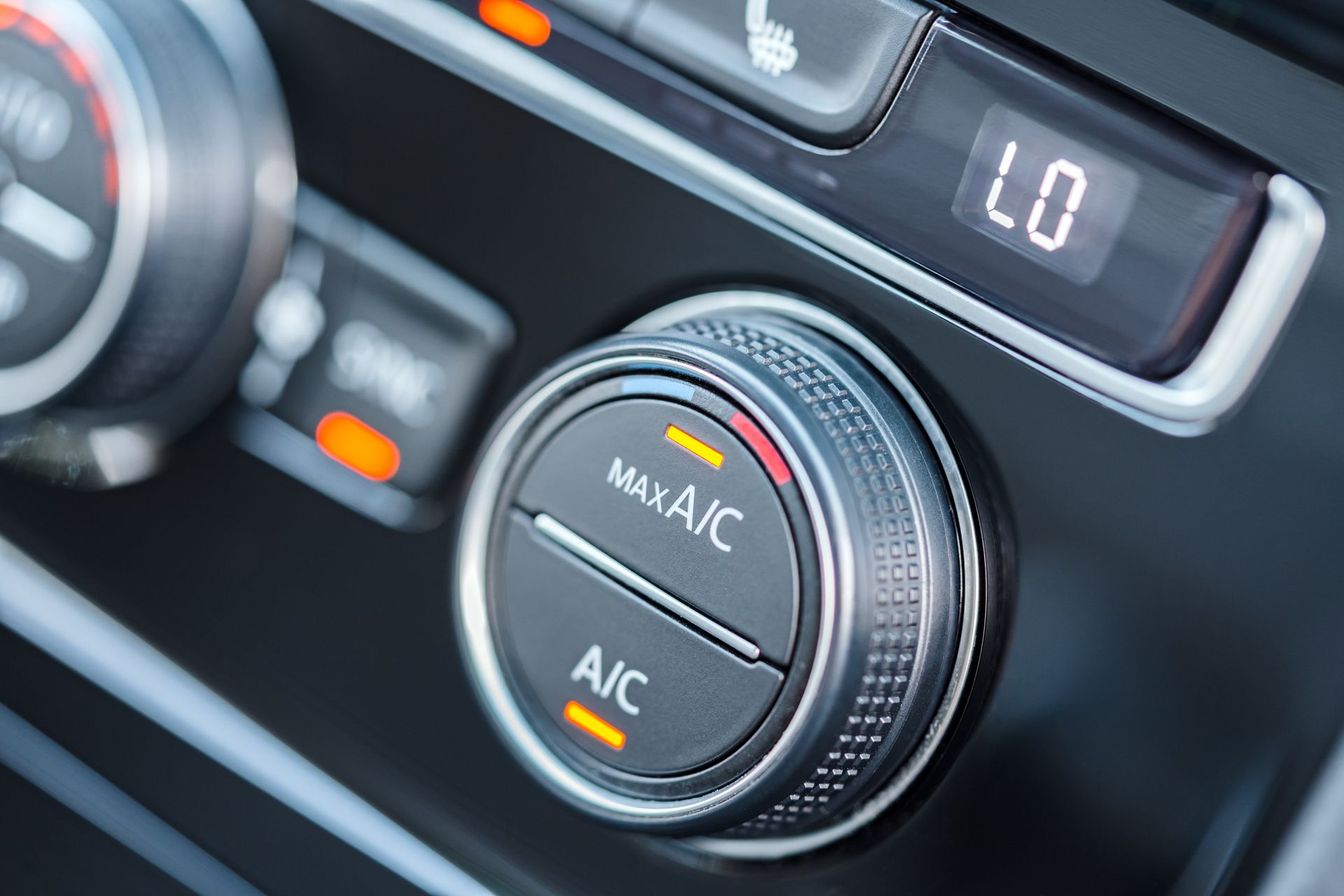
Close-up of car's climate control panel, showing a knob and buttons for air conditioning, with
June 27, 2022
Every component in a vehicle needs regular maintenance to extend its lifecycle. And one particular system that you certainly want to maintain is your vehicle's A/C system. Given the warm climate of California that we live in and call home, your air conditioning unit is one of the most crucial to keep you cool and calm all year. John's Automotive Care is your best choice for auto cooling system repair in La Mesa. Our ASE Certified auto mechanics are either ASE Master-Certified with extensive experience repairing auto cooling systems in all makes and models of foreign and domestic vehicles. Who wants to leave their truck feeling sweaty and stuffy? No one! If there is an issue with your auto cooling system, our auto mechanics will identify and solve the problem. Additionally, most auto repair is backed by a 36,000-mile/36-month warranty. What happens if you neglect to service your A/C system? This is what we'll be covering in this article. Are you ready? Let's get started. Your engine produces a lot of heat, and the cooling system's job is to keep this heat in check. This system will remove excess heat from your engine so your car continues to operate at the right temperature. Your auto cooling system has many parts, including hoses, radiators, and coolants. It is imperative to have a team of qualified auto mechanics inspect your auto cooling system to ensure these parts are in good working order from time to time. Why do I need to service my air conditioning? You can perform a series of inspections on your car's A/C yourself. Start your car, and turn the air conditioning on high when the engine is warm (check the engine's temperature gauge). Carefully listen and check whether any unusual noises are coming from the AC system. If you hear knocking sounds or sounds of something blocking the air canal, it indicates your air conditioning needs service. The second thing you need to check is whether the air pressure is in sync with the level of AC. Is the air coming out of the AC too cold? If the answer to these two questions is yes, then your AC requires professional service. Another indicator is the smell. This is very straightforward. Is there an odd smell coming out of the vents? If yes, there is a possible leak in the air conditioning system. There can be a build-up of mold, fungi, bacteria, or other things you won't love to hear about. The final inspection which you can perform is the compressor. A properly working one will make a clicking sound (which means the compressor is engaging and disengaging). If there are any other sounds, the compressor is probably at fault. How often should a car's AC get service? Whenever you get your car serviced, be sure to have the Air Conditioning inspected. If there is any issue with the air conditioning unit, you will need to have it serviced. On average, you should inspect your auto A/C each year. Fortunately, the John's Automotive Care team is up for the job. We will thoroughly check your auto cooling system for any symptoms of malfunction. If we encounter an issue, we will discuss the best course of action based on your budget, driving habits, and safety. By performing proper auto repair for your auto cooling system, we proudly play a part in keeping you safe on the road in La Mesa.  What happens when you don't service your car's AC? If your A/C is not as effective as it used to be, and you are concerned about driving around in the hot summer months ahead, it's a good idea to get it in as soon as possible. Several harmful consequences will follow when you wait to service your AC system. First, the cooling power will be lost, and the system will start to sustain severe damage. These damages will result in higher costs for repairing or replacing some potentially expensive parts. Your compressor could overheat or even burn out, thus needing to replace the whole system. John's Automotive Care is here to help when your vehicle needs auto cooling system repair. While our auto mechanics service your vehicle, you can sit back and relax, knowing your car is in capable hands. We go above and beyond for you, offering your pup a biscuit, providing you with a thorough, detailed vehicle inspection, or walking you to your car after its service. To schedule an appointment for your auto cooling system, call us. We are located at 7447 University Ave, La Mesa, CA, 91942.

Person’s hands holding a black steering wheel, driving inside a car. A watch is on their left wrist.
October 31, 2021
Most San Diego drivers are too young to remember life before power steering - cranking those great big steering wheels! It was a pretty good workout. Now power steering is standard. Let's look at how it works. The heart of any power steering system is its pump. The pump pressurizes the power steering fluid that provides assist for steering. Most pumps are driven by a belt that is run by the engine; a few are electrically powered. A high-pressure hose passes fluid from the pump to the steering gear. A low pressure hose returns the fluid back to the pump. These hoses can develop leaks, so it is a good idea for San Diego drivers to have them inspected at every oil change. Low fluid can damage the power steering pump. That is why power steering fluid level is on the checklist for a full-service oil change. The fluid needs to be compatible with the hoses and seals, so check your owner's manual for the right type - or just ask your friendly and knowledgeable pros at John's Automotive Care in San Diego. The fluid cleans, cools and lubricates the power steering system. It breaks down as the years go by and collects unwanted moisture, so San Diego drivers need to replace it from time to time. Many vehicle manufacturers specify power steering service intervals. Unfortunately, this important service is sometimes left off the car maintenance schedule for many of us. So, when in doubt, every 25,000 miles/40,000 km or two years is a good fallback. Your technician at John's Automotive Care will use a detergent to clean the system, flush out the old fluid and replace it with the good stuff. Here are some warning signs of trouble with your power steering: It's harder to turn the wheel , there's erratic power assist , you hear loud whining coming from the pump (which may be difficult to hear over the loud whining coming from the backseat), you have to top-off the fluid frequently , or you hear squealing belts . Remember to never hold the steering wheel to the far right or left for more than a few seconds at a time. That will wear out your power steering pump quickly. Other steering components can be bent or damaged from wear or hard knocks: ball-joint, idler-arm, steering-gear, steering-knuckle and tie rod to name a few. Warning signs here are steering play, wandering, uneven tire wear and an off-center steering wheel. An annual alignment check at John's Automotive Care in San Diego will reveal bent or damaged steering components. Most SUV's, pick-ups and rear-wheel-drive cars need regular front-wheel-bearing service. The bearings should be cleaned and inspected. If they are excessively worn, they need to be replaced. The bearings are then repacked in clean grease. The team at John's Automotive Care also recommends the wheel-seal be replaced when the bearings are serviced. Like everything else, check your owners' manual maintenance schedule. It's usually required around every two years or 40,000 miles/64,000 km. If you drive through water in the San Diego area, the bearings will need service more often. John's Automotive Care 6267 Riverdale St San Diego, CA 92120  (619) 280-9315  http://www.johnsautomotivecare.com
Car engine with various black tubes and components.
September 5, 2021
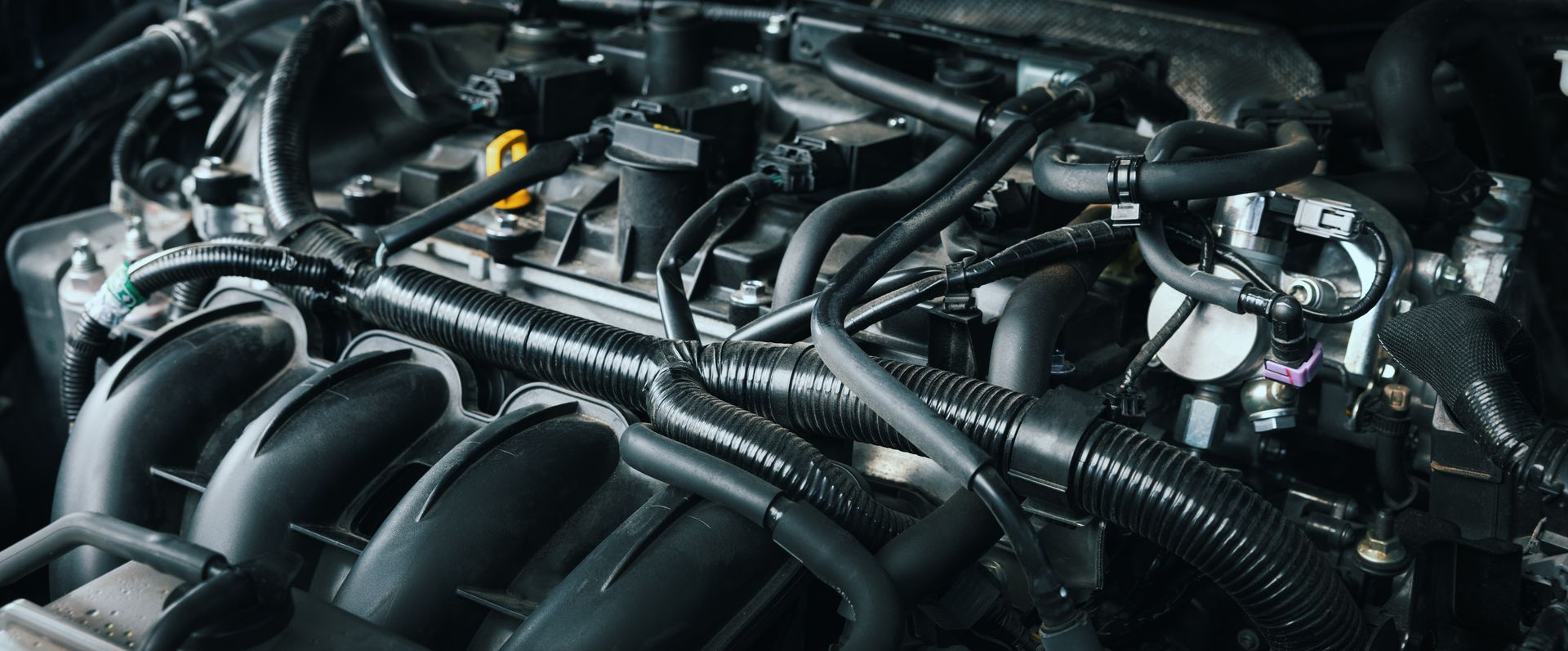
You may have had a friend whose vehicle was the victim of hungry rodents. After all, mice, rats and squirrels—even rabbits—have been known to gnaw on wires in engine compartments, causing vehicle electrical systems to go haywire. They can disable a vehicle completely and be very expensive to fix. In 2017, some drivers noticed their vehicle's wiring was being chewed and found out the automaker was using a relatively new material for covering their wires: soy. Many of the repairs to their new vehicles weren't covered under warranty by the manufacturer when it was discovered rodents were eating the wiring. So the owners filed a class action suit, saying the soy covering was essentially baiting the critters. The automakers tell a different story, saying mice, rats and squirrels have been chewing through wire insulation long before it was made out of soy. Regardless of what the insulation is made of, vehicle owners should make sure rodents aren't chowing down and creating a problem in the engine compartment. They can have their repair facility check for these signs: Little bits of acorns, leaves, chewed up plastic and animal droppings in the engine's nooks and crannies. Using a black light, your technician can detect animal urine, a sure sign that they've been using your engine compartment as a warm apartment, a nest and a dining room. You can take steps to prevent rodents from chomping your vehicle's parts. Honda—one of the vehicle manufacturers that uses soy-based wiring covering—makes a rodent tape. It contains a spice called capsaicin that rodents find too hot to handle. Other preventative measures include installing metal mesh around wiring harnesses or spraying the engine compartment with special rodent-repellants. Rodent damage can cost one vehicle owner thousands of dollars to fix, not the kind of bite anyone wants taken out of their bank account. John's Automotive Care 6267 Riverdale St San Diego, CA 92120  (619) 280-9315  http://www.johnsautomotivecare.com
Close-up of an engine with a timing chain and gears. Metallic components are visible, likely inside a car.
May 23, 2021
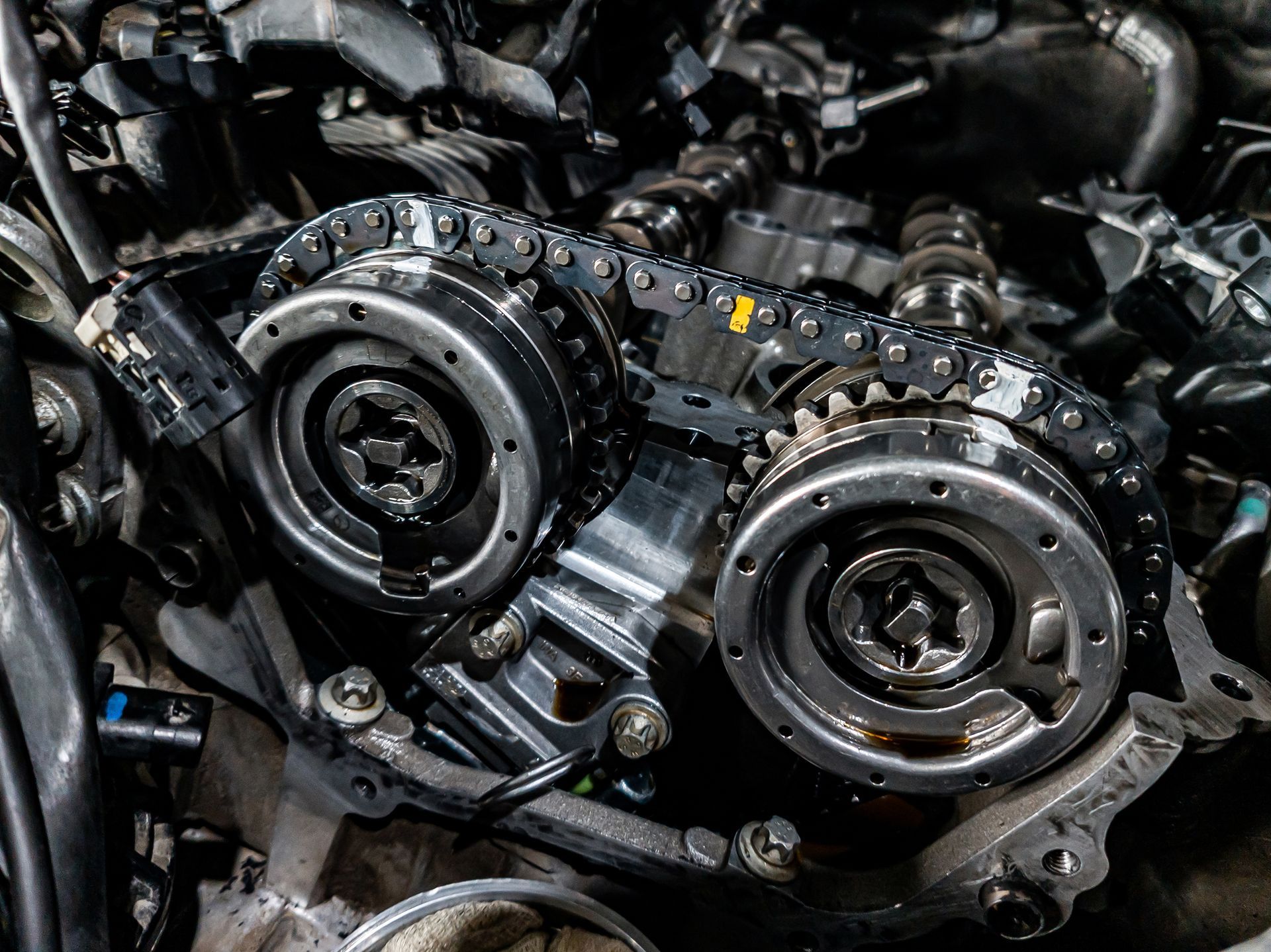
If you've ever felt your vehicle hesitate, go, then hesitate again, you might think there's something wrong with the transmission. After all, it's not moving smoothly down the road. But there are plenty of malfunctions that can cause those symptoms, one of them being something you may have never heard of: the EGR valve. EGR stands for Exhaust Gas Recirculation. It's a system that channels small amounts of exhaust back into the engine to cool down the cylinders and reduce polluting gases. Those include nitrogen oxides that can cause smog. The EGR valve regulates how much of the vehicle's exhaust gas is recirculated. After years and long distances traveled, that valve can get clogged or fail. Sometimes the EGR valve can stick open. When the EGR valve isn't working properly, your vehicle can start releasing those nitrogen oxides and pollute the air. The symptoms of a malfunctioning EGR valve include: Engine losing power Engine idling roughly Pinging and knocking sounds in the engine Stalling and hesitation Fuel economy decreasing Check Engine light illuminated Depending on its condition, the EGR valve can be cleaned or it may need to be replaced. Consult with your service advisor to see what options are recommended to you. The EGR system is part of your vehicle's pollution and emissions control equipment. If you care about keeping our planet's atmosphere clean, you'll want to make sure it's doing its job—for everyone's benefit. John's Automotive Care 6267 Riverdale St San Diego, CA 92120 (619) 280-9315  http://www.johnsautomotivecare.com